
Planting the Seed
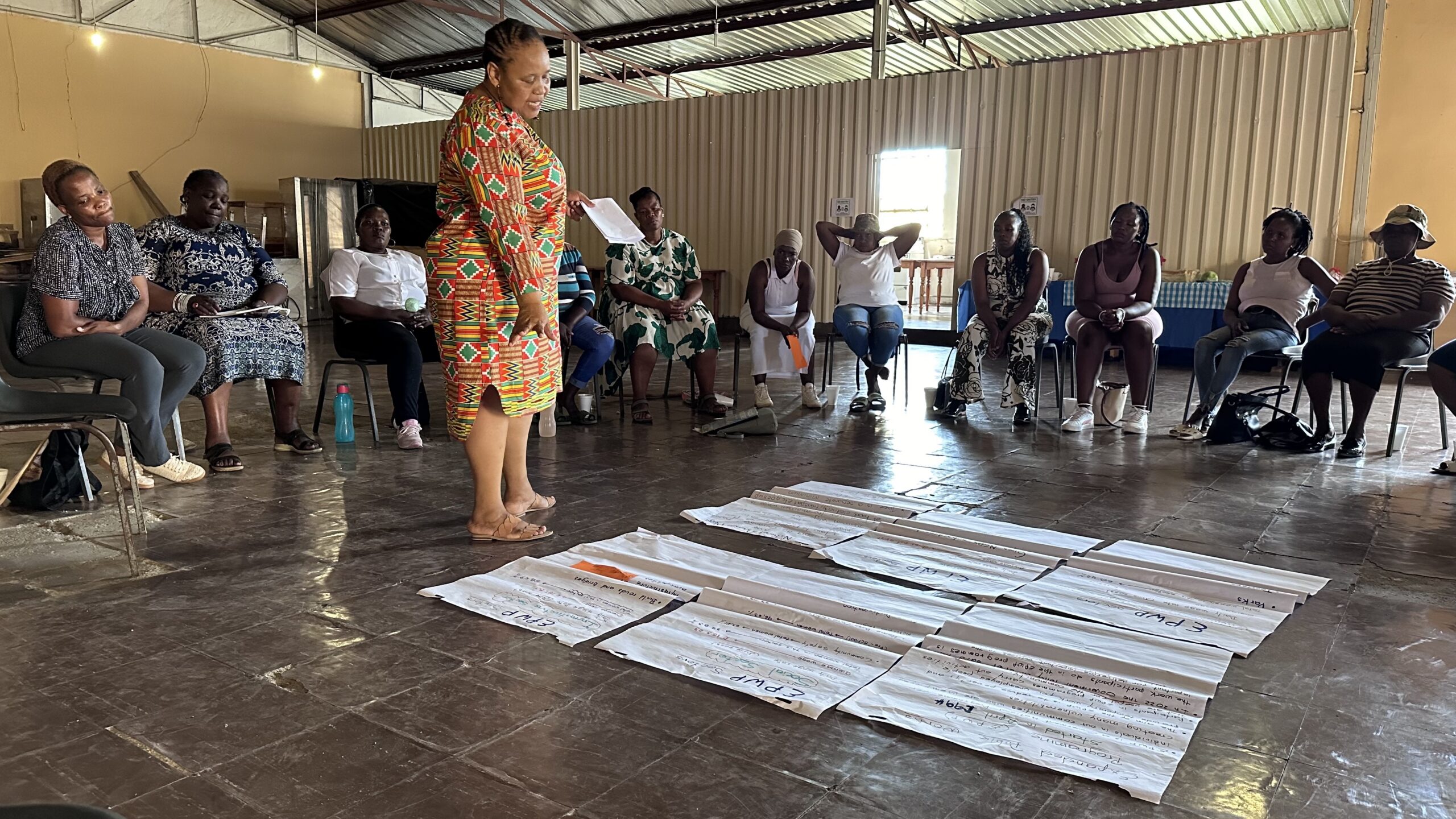
In a community hall in Evaton, south of Johannesburg, South Africa, women gathered to talk about work that is often invisible. They travelled long distances to be there. Some arrived tired from early morning routines. Others came straight from the schools where they cook, clean, and serve meals to children.
These women are voluntary food handlers (VFHs): workers in school feeding schemes who are essential to the daily functioning of schools, yet whose labour is precarious, underpaid, and often unrecognised.
Their gathering was not just a meeting. It was part of a longer journey of organising: one that connects everyday survival to collective power, and individual struggles to systemic change.
This work has been supported through the Power Up! programme, a multi-country initiative that strengthens feminist organising, leadership, and institutional change. In South Africa, one of Gender at Work’s partners in this journey is the Labour Research Service (LRS).
Women, Work, and Precarity
Voluntary food handlers sit at the intersection of multiple inequalities. They are overwhelmingly women; many are Black women from working-class communities; and their labour is shaped by systems that rely on care work while failing to value it.
They prepare food for thousands of children every day through the National School Nutrition Programme. Yet their employment conditions are unstable. Many are classified as “volunteers” despite working long hours. Their stipends are low. Their contracts are insecure.
This contradiction sits at the heart of their organising. The work they do is essential. The way it is structured renders them disposable.
For many of the women involved, the issue is not only income. It is dignity, recognition, and the right to be treated as workers with rights.
The Role of LRS: Building from What Exists
The Labour Research Service entered this space not as an external fixer, but as an organisation committed to supporting workers’ own organising processes.
Rather than imposing solutions, the approach was to listen: to understand how women were already navigating their conditions, and what forms of collective action were already emerging.
Through its gender programme, LRS worked with voluntary food handlers to build spaces where women could come together, reflect on their shared realities, and begin to organise collectively.
This approach also aligns with a core principle of Gender at Work: change is not only about policies or programmes. It is about shifting power. And power is built through collective processes.
From Isolation to Collective Identity
Before organising began, many voluntary food handlers experienced their work in isolation. Each woman dealt with her own challenges: delayed stipends, unclear contracts, lack of recognition.
Bringing women together changed this.
In meetings and workshops, they began to see that their experiences were not individual problems but shared conditions. This shift from “my issue” to “our issue” is a critical step in building collective power.
Through dialogue, women named their realities. They spoke about long hours, lack of benefits, and the emotional labour of caring for children while being treated as expendable.
These conversations were not only about problems. They were also about possibility.
Power Up! and Feminist Organising
The Power Up! programme created space to deepen this work. It supported partners like LRS to strengthen feminist approaches to organising: approaches that centre women’s lived experiences, challenge unequal power relations, and build collective agency.
Through Power Up!, LRS was able to:
- Expand its engagement with voluntary food handlers.
- Strengthen facilitation processes that centre women’s voices.
- Support leadership development among workers.
- Connect local organising to broader conversations about labour rights and gender justice.
Importantly, the programme recognised that organising is not linear. It requires time, trust, and sustained engagement.
Building Leadership from Within
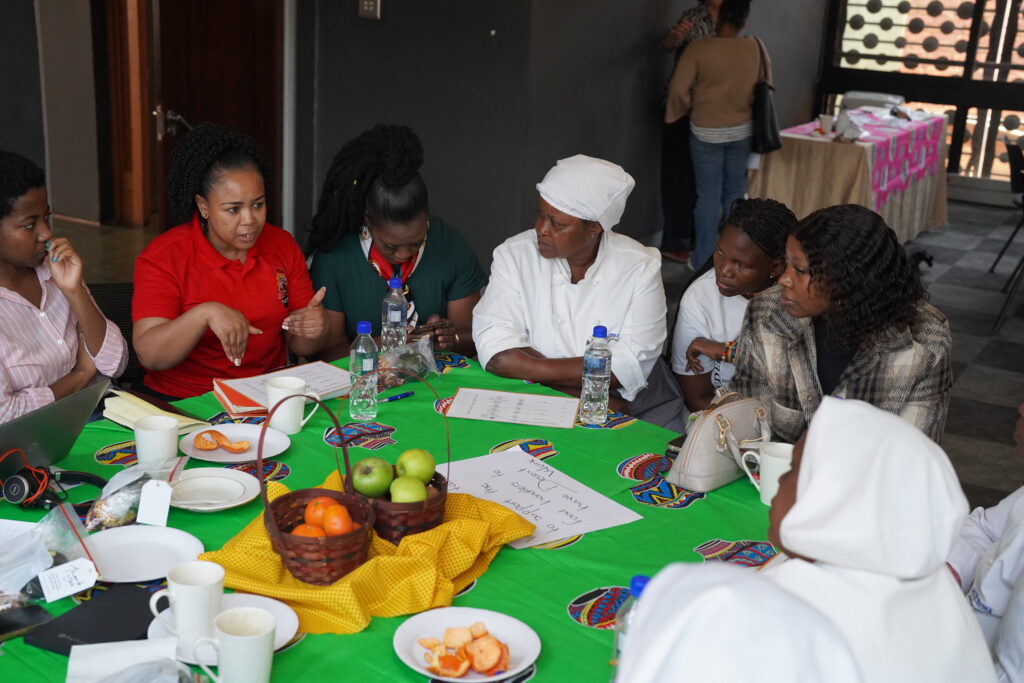
One of the most significant shifts in the work has been the emergence of leadership among voluntary food handlers themselves.
Women who initially sat in meetings quietly began to speak up. Those who had never seen themselves as leaders started facilitating discussions, representing others, and engaging with officials.
Leadership here is not about formal titles. It is about the ability to analyse conditions, mobilise others, and act collectively.
This kind of leadership is rooted in experience. It grows from the everyday realities of work and life.
Making Work Visible
A key part of the organising process has been making invisible labour visible.
Voluntary food handlers perform essential work that sustains schools and communities. Yet their contribution is often taken for granted.
Through collective organising, women have begun to assert the value of their work. They have articulated their demands more clearly: for fair wages, secure contracts, and recognition as workers.
This shift is both practical and political. It challenges systems that rely on undervalued care labour. It insists that this work matters.
From Local Meetings to Broader Advocacy
As organising strengthened, the work began to move beyond local meetings.
Women started engaging more directly with institutions and authorities. They brought their collective voice into spaces where decisions are made about their work.
This included:
- Engaging with government structures linked to school feeding programmes.
- Raising concerns about working conditions.
- Advocating for clearer policies and improved implementation.
Taking these steps is not easy. They require confidence, coordination, and support.
The role of LRS and Power Up! has been to create conditions in which this becomes possible.
Challenges Along the Way
The journey has not been straightforward.
Women continue to face significant barriers:
- Economic insecurity that limits time and resources for organising.
- Institutional resistance to recognising their demands.
- The ongoing burden of unpaid and care work at home.
There are also challenges within organising processes themselves: sustaining participation, managing expectations, and navigating differences within groups.
Recognising these challenges is part of the work. Feminist organising does not assume smooth progress. It engages with complexity.
What Has Changed
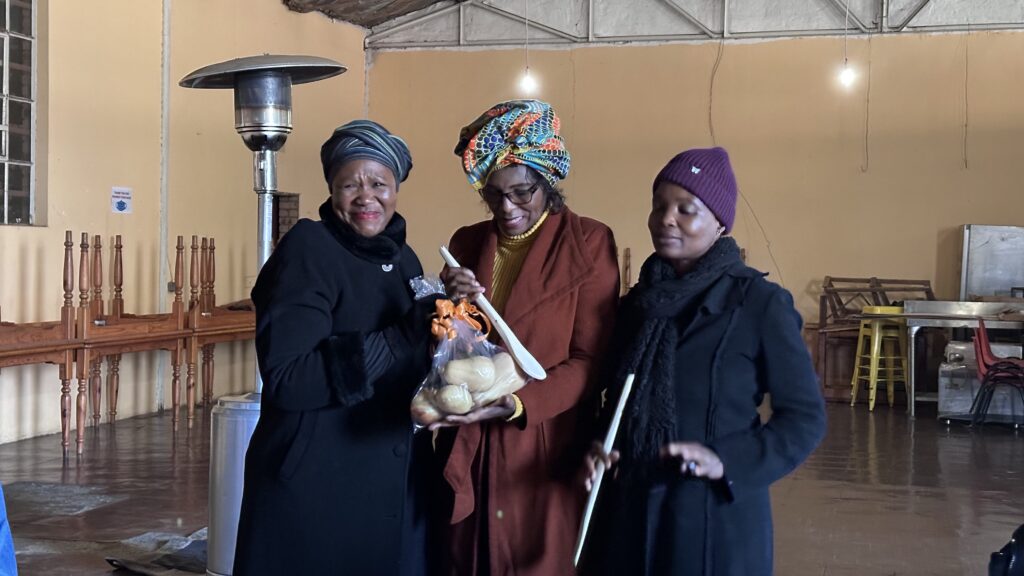
Despite these challenges, there have been important shifts.
Women have moved from isolation to collective identity.
They have developed stronger analysis of their conditions.
They have begun to assert their rights more clearly.
They have built relationships that sustain ongoing organising.
These changes may not always be immediately visible in policy outcomes. But they are foundational.
They represent shifts in power: in how women see themselves, how they relate to each other, and how they engage with systems.
A Different Way of Working
The partnership between Gender at Work and LRS offers a different way of thinking about change.
It is not about delivering services to passive beneficiaries.
It is about supporting active agents of change.
It recognises that:
- Women already have knowledge and strategies.
- Collective processes are essential for sustainable change.
- Power must be built, not given.
This approach requires patience. It also requires trust in the capacity of people to organise and lead.
Looking Ahead
As the Power Up! programme comes to a close, the work does not end.
The relationships built, the leadership developed, and the collective processes established continue beyond the life of the project.
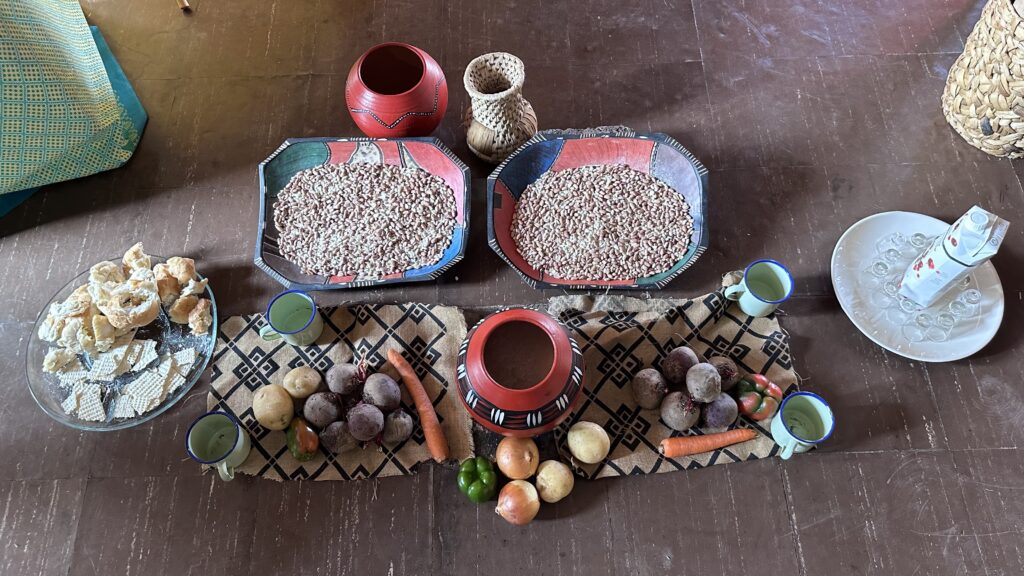
Voluntary food handlers are not only workers in a programme. They are organisers, leaders, and agents of change in their communities.
The task ahead is to sustain and deepen this work: to continue building collective power, to strengthen alliances, and to push for systemic change.
Read more about the food handlers: Part 1 and Part 2
Learn more about Power Up!