Our Reflections

At Gender at Work, we are committed to reflection as both a political and pedagogical act, using it to reveal insights, challenge assumptions, and adapt our practices. Our approach to learning is emergent: shaped by context, grounded in feminist values and open to the unknown. We see learning as both a method and a muscle: something strengthened through practice, vulnerability and shared reflection.

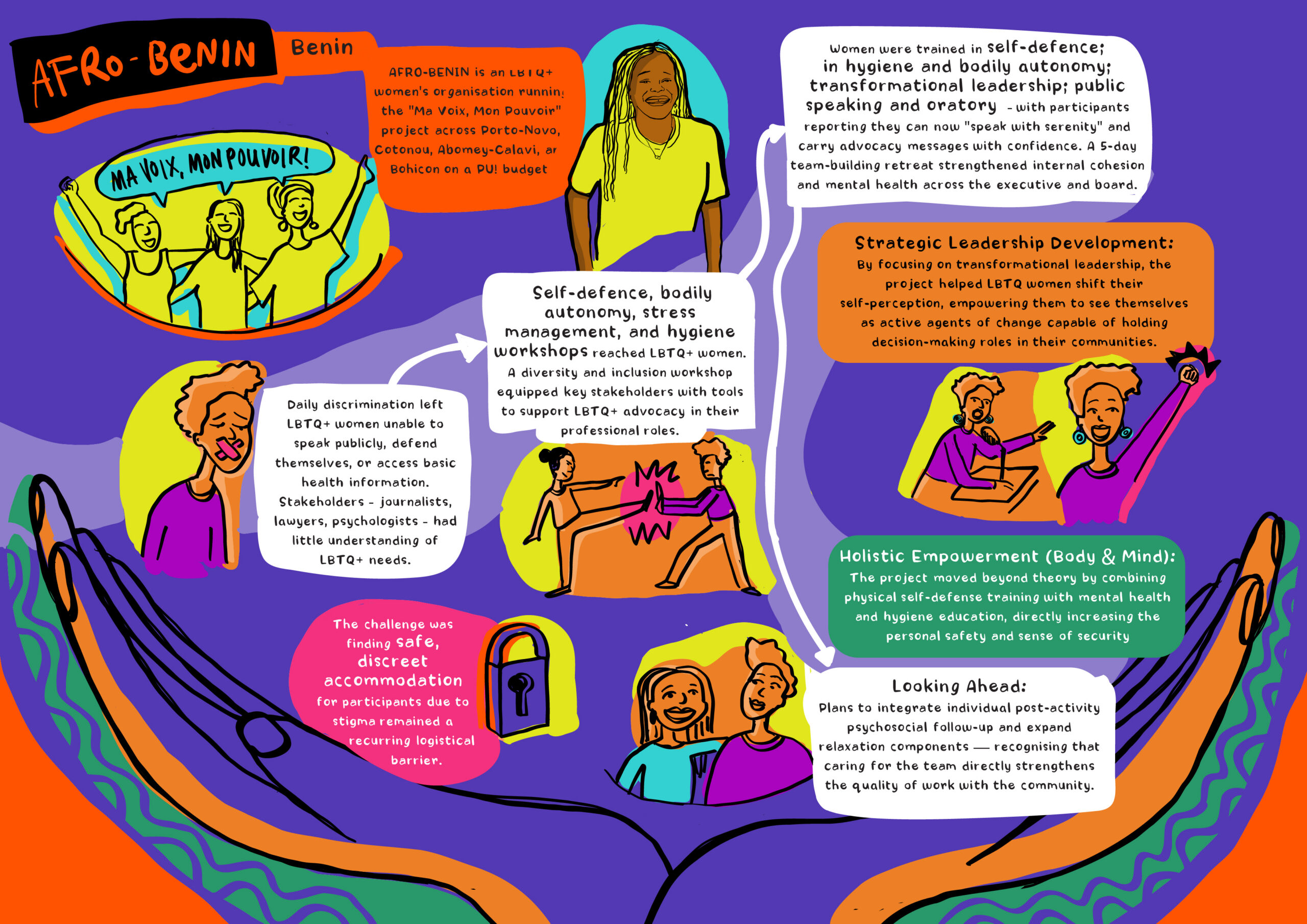
Existing, Inventing, Creating One’s Own World: Being a Queer Woman in Africa

The second story in our special series on the Power Up! programme (2021–2025) highlights how feminist organising takes shape across contexts; focusing on our partners in Africa who created spaces for women's healing, creativity, leadership, and political participation. It traces how queer women, often facing erasure and exclusion, are reclaiming their bodies, voices, and resources; building confidence, asserting their rights, and crafting new pathways to autonomy and collective power.

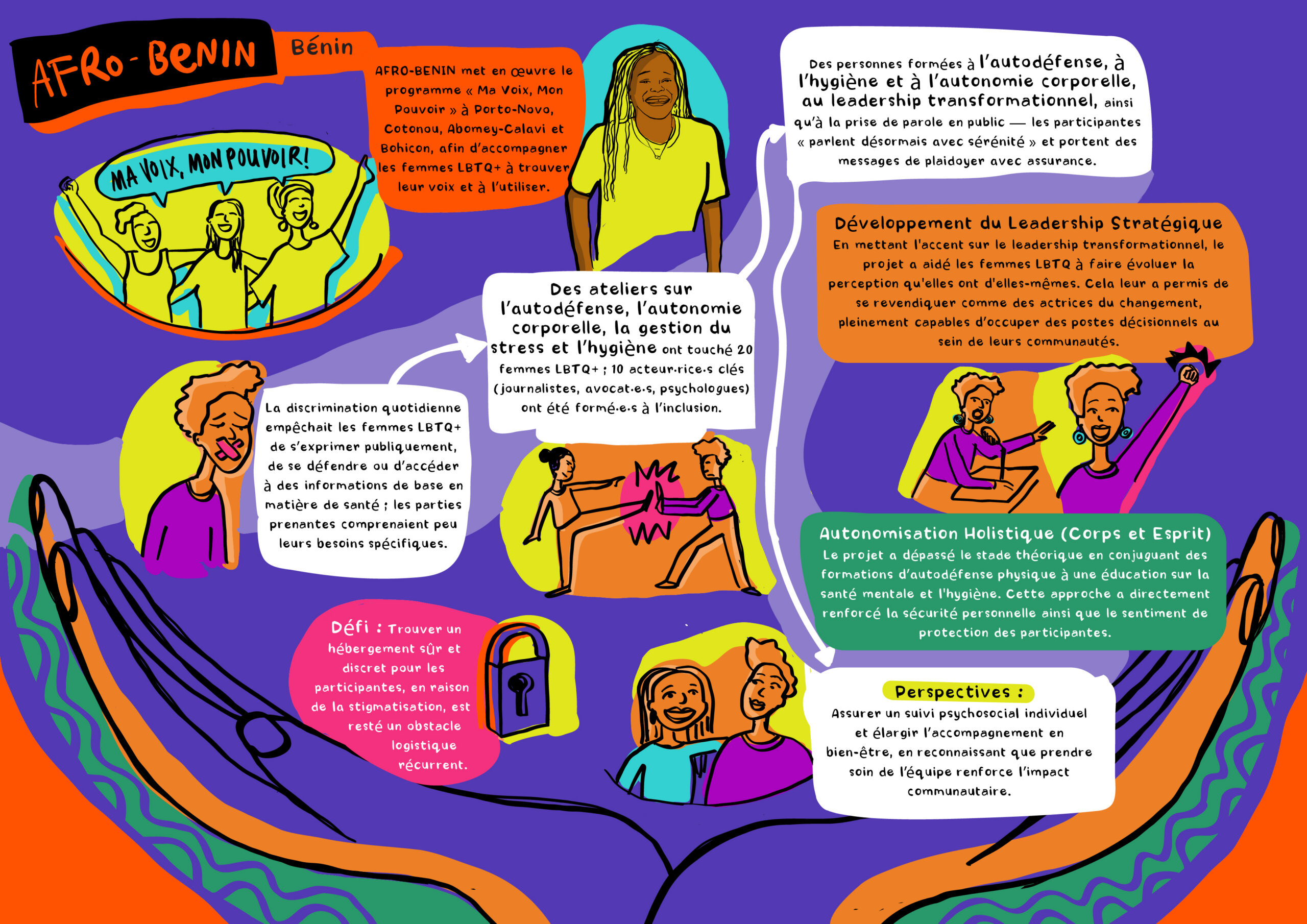
Exister, inventer, créer son monde : être une femme queer en Afrique

Le deuxième article de notre série spéciale sur le programme Power Up! (2021–2025) souligne la manière dont l’action féministe prend forme dans différents contextes en mettant en lumière comment nos partenaires en Afrique ont créé des espaces de guérison, de créativité, de leadership et de participation politique pour les femmes. Il retrace la manière dont des femmes queer, souvent confrontées à l’effacement et à l’exclusion, se réapproprient leurs corps, leurs voix et leurs ressources ; renforcent leur confiance, revendiquent leurs droits et tracent de nouvelles voies vers l’autonomie et le pouvoir collectif.

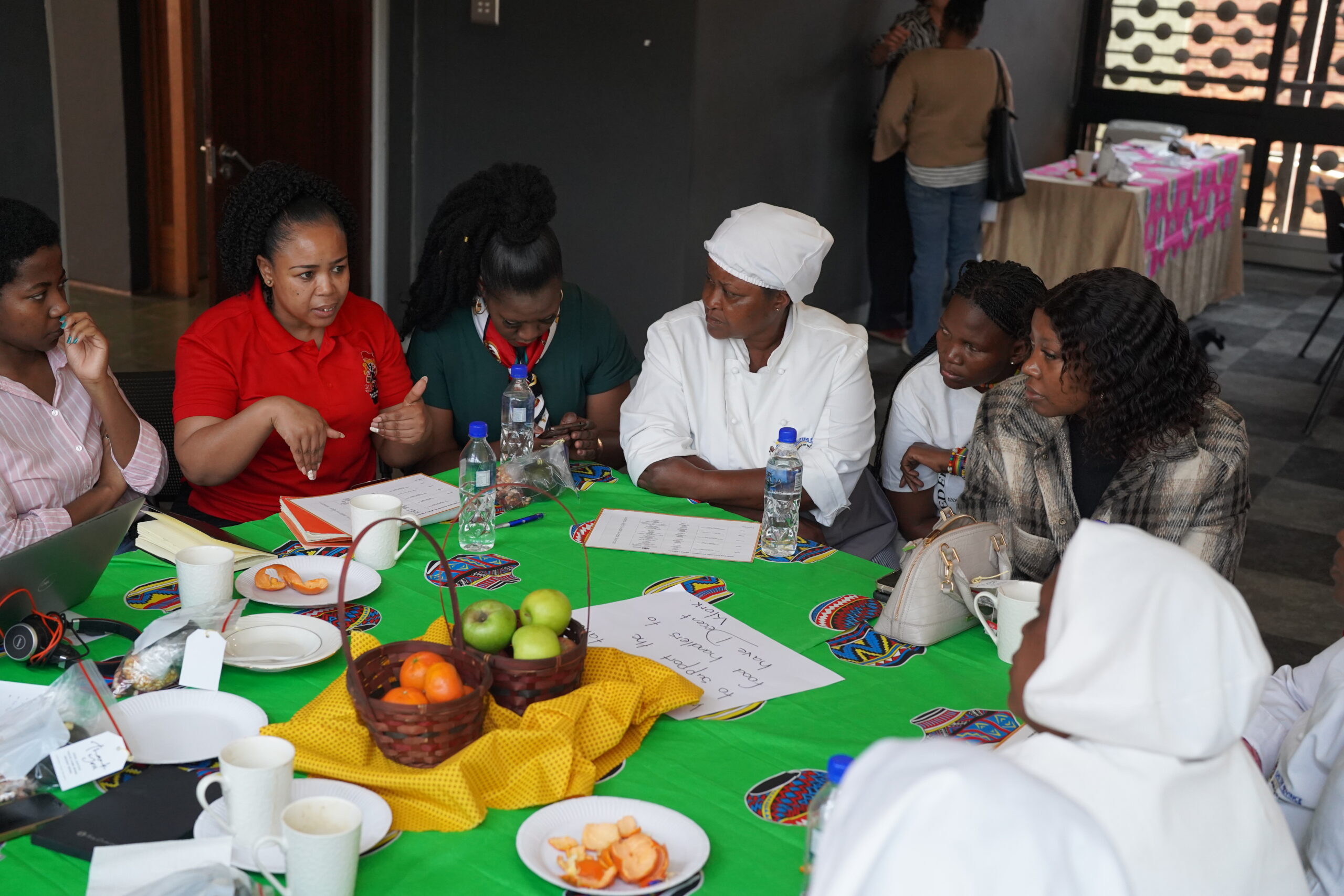
Organising from the Ground Up: How Women Food Workers Built Collective Power in South Africa 

As part of a special series following the close of the Power Up! programme (2021-2025), this story highlights how women food handlers in South Africa, supported by Gender at Work and the Labour Research Service, are organising to transform precarious work into collective power. It traces their journey from isolation to leadership; reclaiming the value of care work, strengthening their voices, and advancing more just and dignified conditions for women workers.

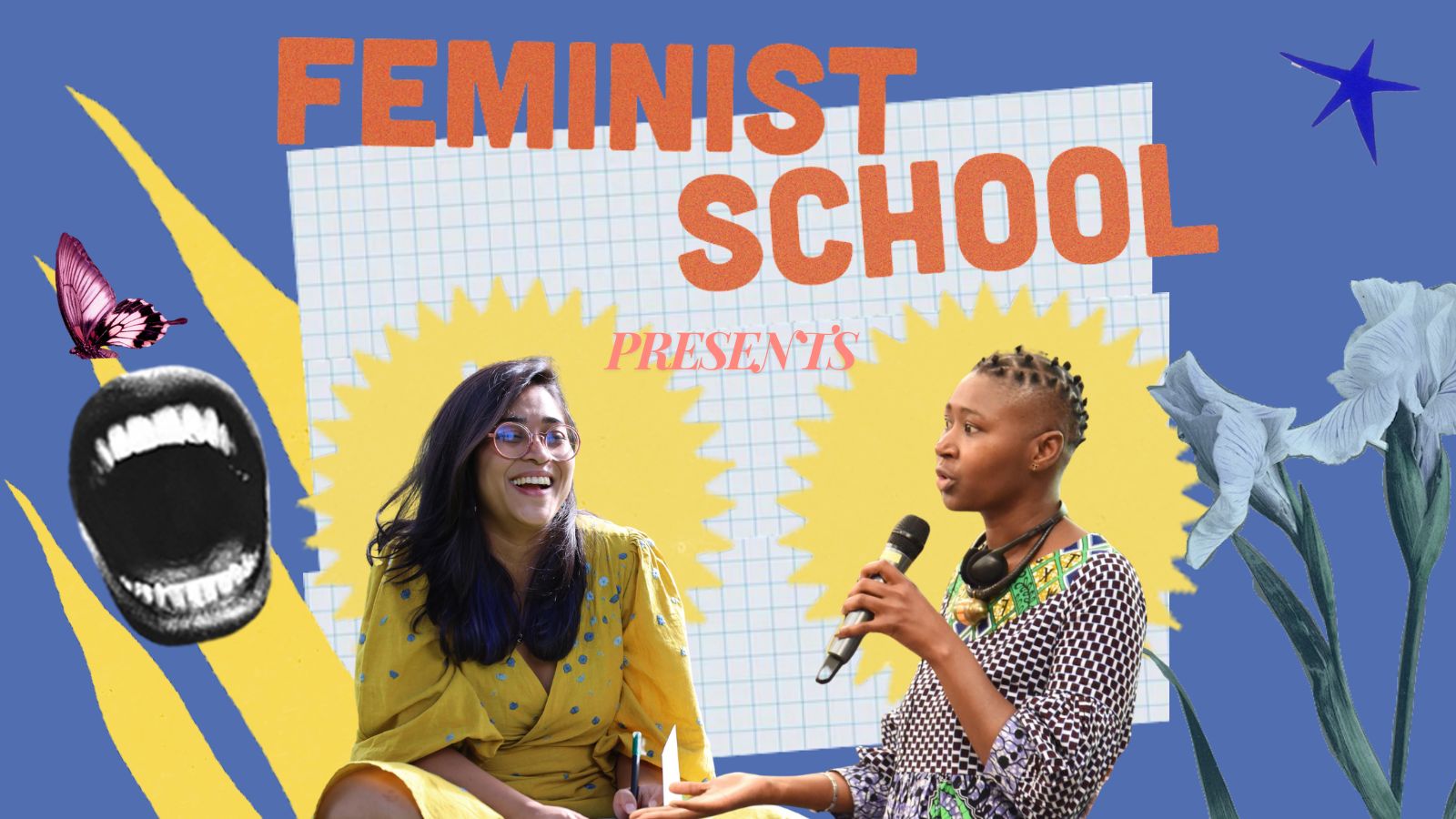
Feminist School: a conversation with Aayushi Aggarwal and Khanysa Mabyeka

Two of the many minds and hearts behind the Feminist School – Aayushi Aggarwal and Khanysa Mabyeka, both inspiring feminists and Associates at Gender at Work – share about the story of FS, what excites them about being involved in it, their learnings and experiences in shaping its curriculum, the challenges they encountered along the way as facilitators, and much more.

My Journey: a short reflection on my PLJ/GEI path

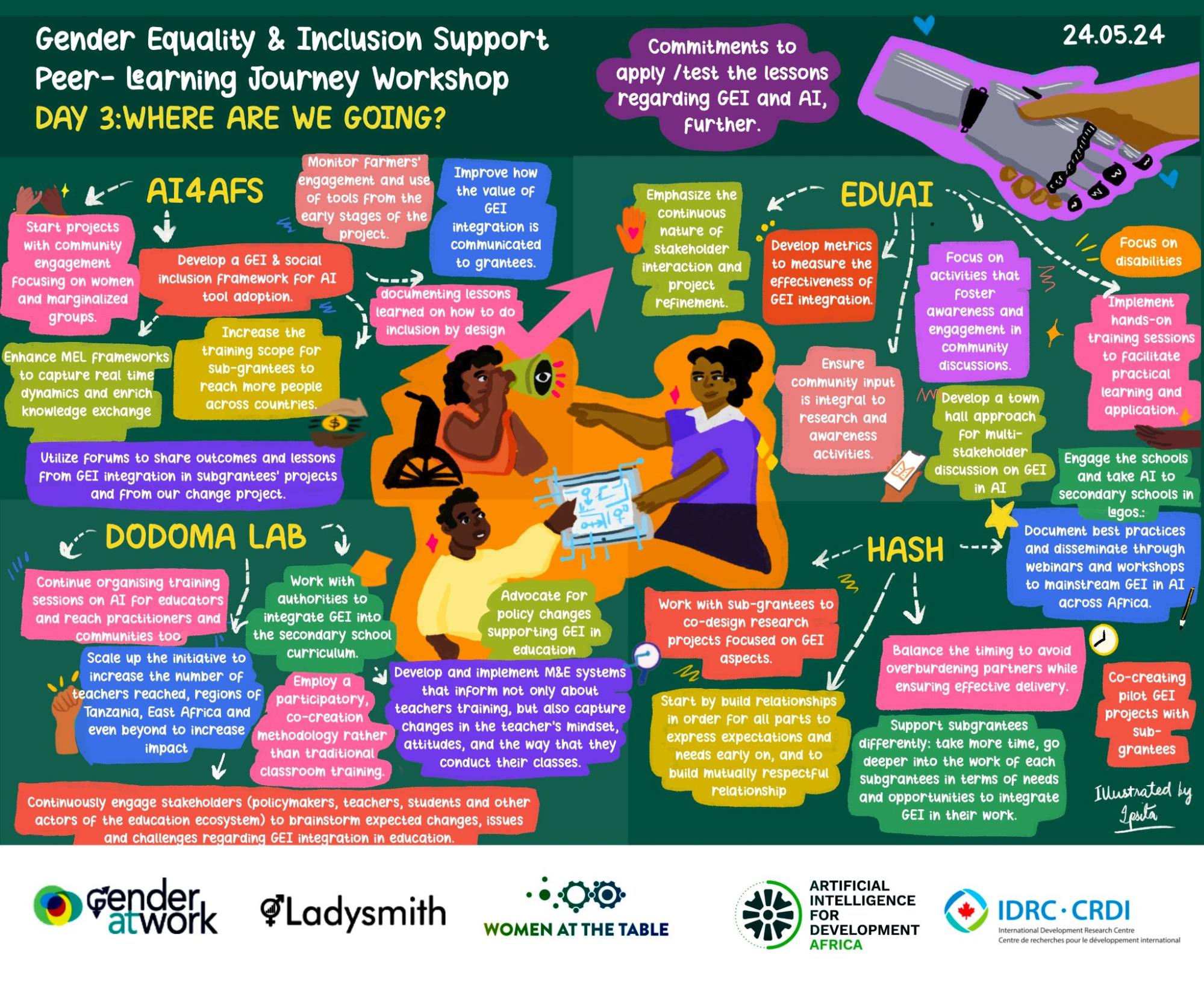
In this sixth blog in the “Keeping the light on: Reflections on GEI and AI in Africa” series, Sam Rex Sagoe Babo writes about how listening to women and other marginalized groups to co-create AI technologies in agriculture and food significantly shifted his research approach. He describes taking on a “design-by-inclusion” methodology in all his research through co-creation to bring diverse voices for more responsible, ethical and inclusive AI.

Putting myself in the shoes of another

In this fifth blog in the “Keeping the light on: Reflections on GEI and AI in Africa” series, Dr Elizabeth Oseku, project coordinator for the Hub for Artificial Intelligence in Maternal, Sexual and Reproductive Health in Sub-Saharan Africa (HASH), part of AI4D, reflects on her personal and hub’s journey to put herself in the shoes of the diversity of people with sexual and reproductive health needs. She thinks about the importance of more intersectional data in AI driven solutions.

Integrating gender equality and social inclusion in my AI4D Research journey

In this fourth blog in the “Keeping the light on: Reflections on GEI and AI in Africa” series, Gloriana Monko, an avid AI practitioner, PhD researcher and Liaison Manager/Gender Coordinator of Africa’s Anglophone Multidisciplinary Research Lab, a part of AI4D, reflects on her lab’s journey to challenge traditional STEM education in the “Girls in AI” initiative.

I felt a light shine on me: my GEI AI4D integration journey

In this third blog in the “Keeping the light on: Reflections on GEI and AI in Africa” series, Thummim Iyoha-Osagie, a Lawyer, PhD Student, and Research Program Manager at the Hub for Artificial Intelligence in Education (Edu AI Hub) reflects on finding meaning and relevance in her hub’s ‘Change experiment’ to co-create with sub-grantees ways to bring user and design communities closer together for AI for education.

My journey integrating gender equality and social inclusion in the AI4D Research

In this second blog in the “Keeping the light on: Reflections on GEI and AI in Africa” series, Joel Nwakaire, an Engineer, professor at ATPS and Project Officer of the Responsible Artificial Intelligence for Agriculture and Food Systems Innovation Research Network (AI4AFS), part of AI4D, reflects on his own biases about gender and abilities that he learned in childhood. He comes to realise that similar discrimination and inequities structure his own academic and research worlds such as few women in AI, and by extension, against women farmers and farmers living with disabilities. He shares his journey to valuing the knowledge of women farmers and PLWDs in co-creating AI tools for and with these farmers to champion more diverse workplaces in AI related fields.

Misconceptions and divides: my previous experience with GEI integration in research

In this first blog in the “Keeping the light on: Reflections on GEI and AI in Africa” series, Daisy Salifu, a biostatistician at the International Centre of Insect Physiology and Ecology (icipe) Data Management, Modelling and Geo-information unit, reflects on her own “aha moments” finding meaning and relevance of GEI in her own AI work in the agriculture and food systems field, implementing inclusion-by-design with women farmers and people living with disabilities in Uganda and Nigeria.