
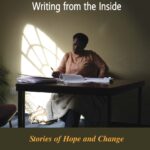
“The Gender at Work CSO strengthening program was initiated to advance women’s rights, gender equality and social justice. Operating since 2004, the program addresses multiple levels – the personal, organizational and societal/community. It is holistic – recognizing that deep change can only come about through working with the head (rational thought), the heart (attitudes, values, feelings and emotions) and the hands/feet (actions and behaviours). In 2004 Gender at Work started a Gender Action Learning (GAL) process with six organizations in South Africa. Three of these organizations wrote about their organizational change stories in “Change is a Slow Dance”2 . From 2008 to February 2010, Gender at Work undertook a “deepening” process with four of these six organizations (JAW, SACCAWU, TAC, WFP) and started a new process with four community-based organizations (Kganya Consortium, REMMOHO, Vukani, Sikhula Sonke). The authors of the current stories were participants in these two processes. The CSO Program lasted between 18-24 months. It started with a series of meetings between Gender at Work and the potential partner organizations, where Gender at Work invited the organizations to be a part of the program. Each participating organisation then set up a three to four member change team. In a two-day meeting the team reflected on the history, culture, and programs of the organization; on how women and men live in their community and in their organization; and developed an Organizational Strengthening Project to improve gender relations either inside their organization or in the community. In addition, the team was introduced to body-mind-spirit practices3 , and to the use of creative forms of expression to free up energy so as to achieve new understandings and actions. The Organization Strengthening Program that followed, included three action-learning workshops, support from a facilitator between Action Learning meetings, and a writing workshop…
The Writing Workshop: Through all the Action Learning meetings Gender at Work facilitators made use of writing to aid reflection and learning. Creating opportunities for participants to write about their experiences in their own words was a crucially important part of the program, and built a personal sense of power. The writing workshop held in May 2010 was inspired by Louise Dunlap’s work and drew on her book Undoing the Silence: Six Tools for Social Change Writing, New Village Press 2007. The workshop5 provided support and space for participants to write the stories that make up this book. The place of writing in social change We believe that encouraging writing supports change agents and gender activists to value their own role in seeing, naming and communicating their contribution to advancing human rights and women’s equality within organizations and society. Writing is a powerful means of undoing the silence built up from years of class, race and gender exclusion. Creating space for participants to write and find their own voices contributes towards creating new social norms – where women ‘undo’ silence, represent themselves strongly, and as knowledge producers start to play a more powerful role in their communities. The stories that follow illustrate how the CSO program supports individuals in their personal and organizational struggles and the part writing plays in this.”
- – Michal Friedman, December 2010