Understanding social norms change in Nepal
What is in a story? People have always told stories. Can they be used as part of a research process to understand shifts in our societies?
In 2022, Gender at Work partnered with The Story Kitchen (TSK) to undertake research as part of Hamro Sahakarya (Our Collective Action), an initiative by UN Women Nepal funded by the Government of Finland to promote social norms change.
Hamro Sahakarya has three components: research to understand the factors that enable or hinder social norm change processes, community-based programme interventions to shift social norms and evidence-based advocacy to influence the policy and programming landscape.
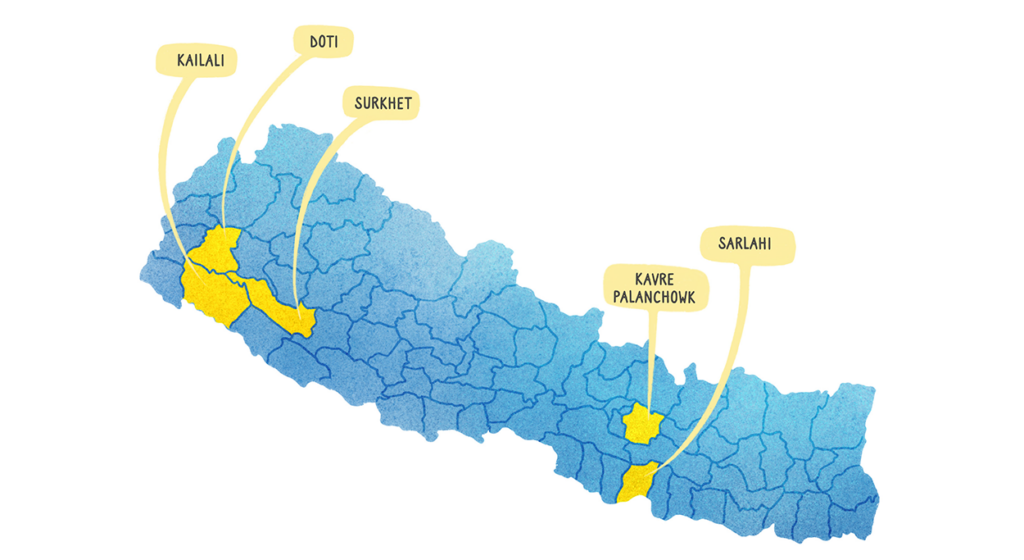
G@W, the research lead, in partnership with TSK, a pioneering storytelling organisation based in Nepal, conducted a baseline assessment between May and September 2022, working with community-based peer researchers to gather 1,000 stories from storytellers of all ages and from varied socioeconomic and ethnic backgrounds in five districts of Nepal, to understand how harmful social norms affect gender equality and social inclusion goals in Nepal.
Stories, prompted with open-ended questions, allowed storytellers to reflect on specific incidents related to harmful social norms and helped identify moments that were most significant to them.
Our research areas
Storytelling as a novel research methodology
People have always told stories. Storytelling can be empowering, enabling women and girls to own their narratives. When integrated into a research process, storytelling can enable the research participants to become those who interpret the significance of various moments and analyse change in their communities. The Hamro Sahakarya programme comprises a longitudinal research process that integrates storytelling to test and track identifiable change pathways, which influence discriminatory and gendered social norms. The learning is used to inform social norm change research, programming and policymaking.

What have we learnt about social norms change?
A story-telling project in Nepal incubated a feminist, participatory research process, where women, girls and other community members were enabled, as part of a research process, to tell their own stories of social norms related change, their empowerment journey, as they experience it and witness it.
In Nepal, women and girls face multiple hardships: caste-based discrimination, restrictions during menstruation (chhaupadi), child marriage, dowry and related violence and witch-craft accusations and persecutions. The Covid-19 pandemic created the conditions in which many of these harmful practices could thrive even more, leaving a devastating impact on the lives of women and girls.
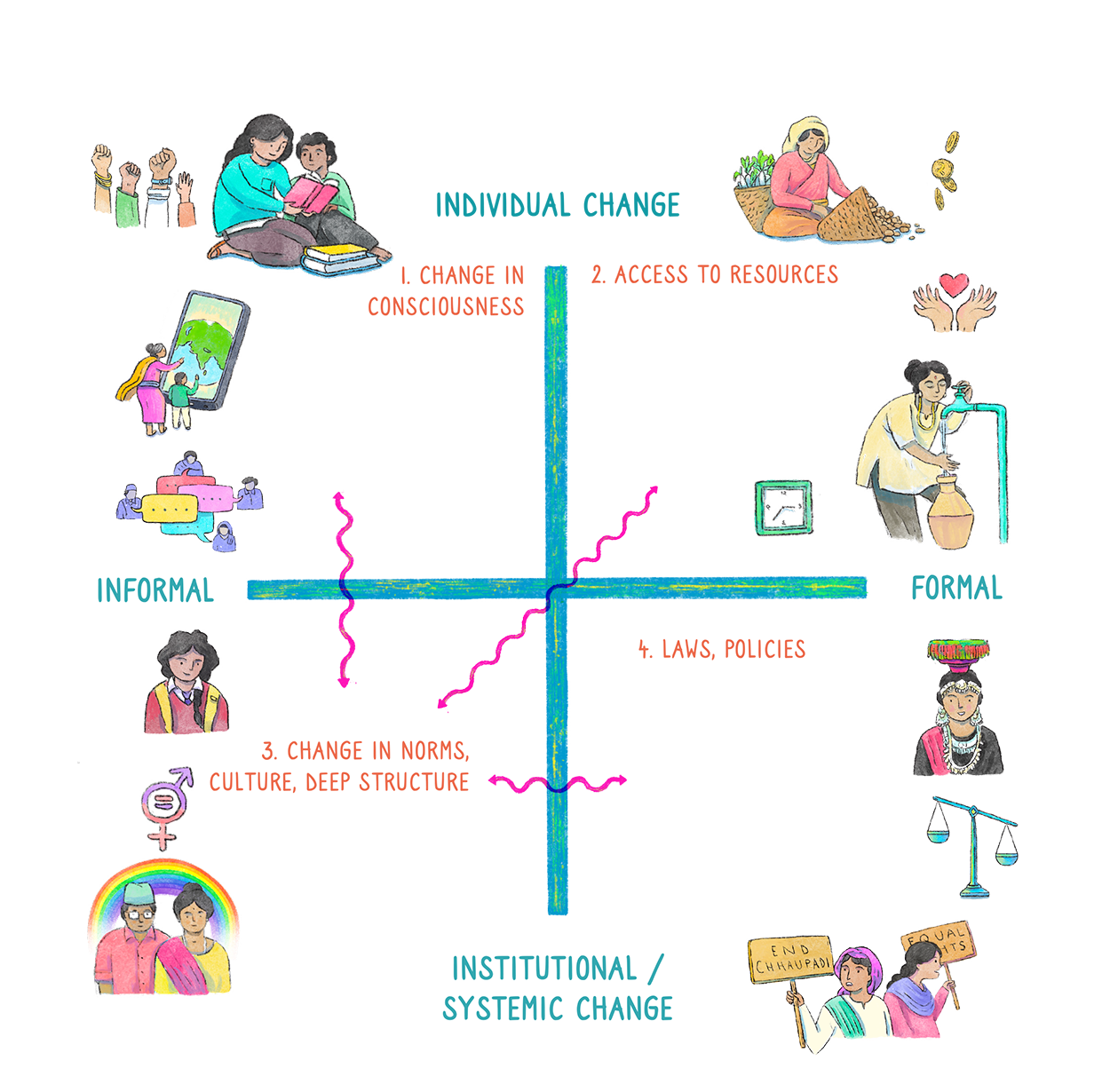
The stories revealed that harmful norms continue to exist but there are signs of change. The stories and analysis demonstrated that for transformative change to become a reality, change is required in multiple domains, as understood through the Gender at Work Framework.
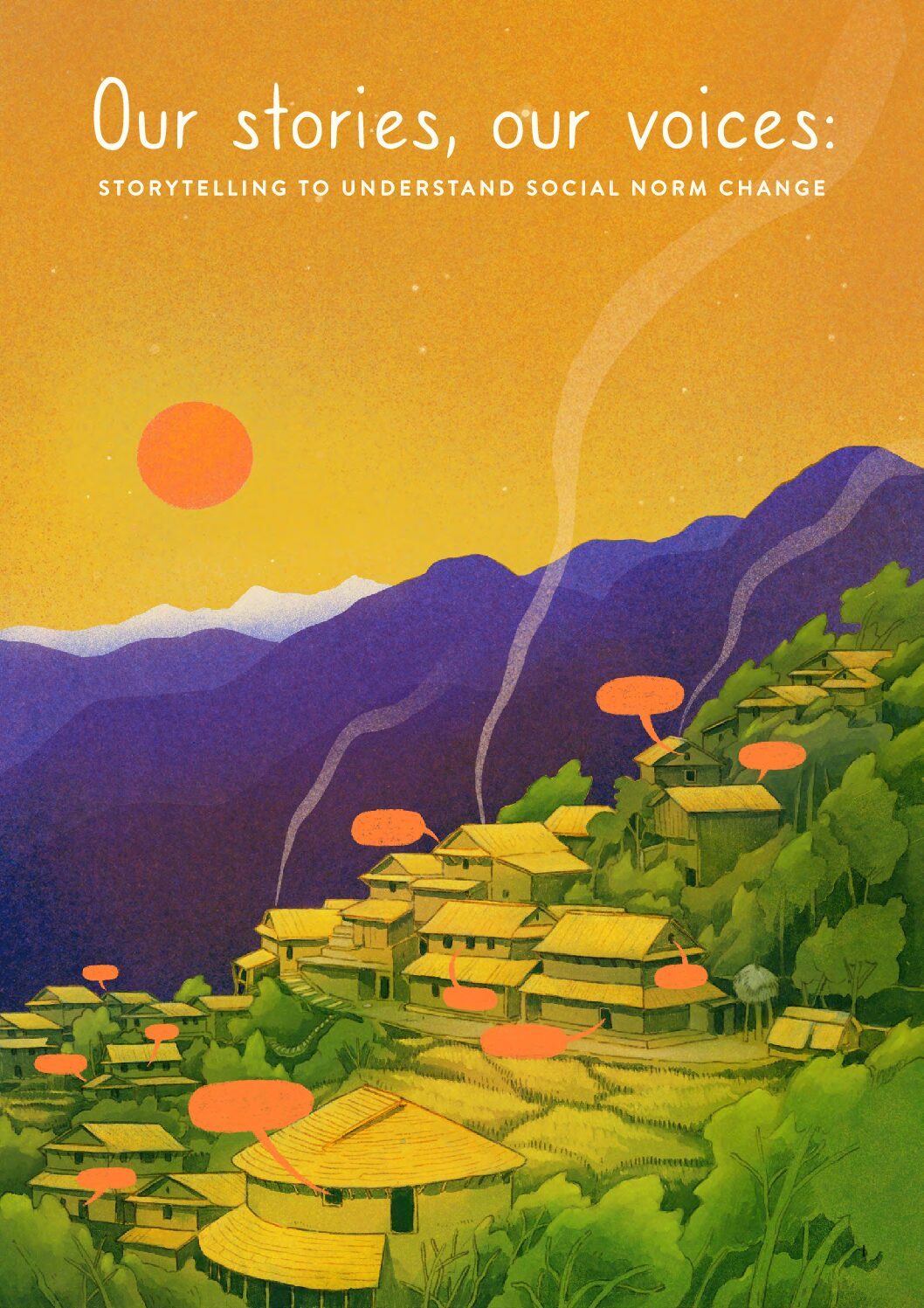
Our stories, our voices
To read more about the stories, what they tell us and how they contribute to changing social norms, read the full report from the first phase.
Reversing knowledge hierarchies
The research methodology for the baseline integrated mass storytelling into its process, drawing on Nepal’s long tradition of storytelling. Using participatory and feminist principles, this research process tested a research tool and an analytical approach that placed women and girls at the centre of the storytelling and signification process, understanding current harmful norms and change narratives through their lived experiences.
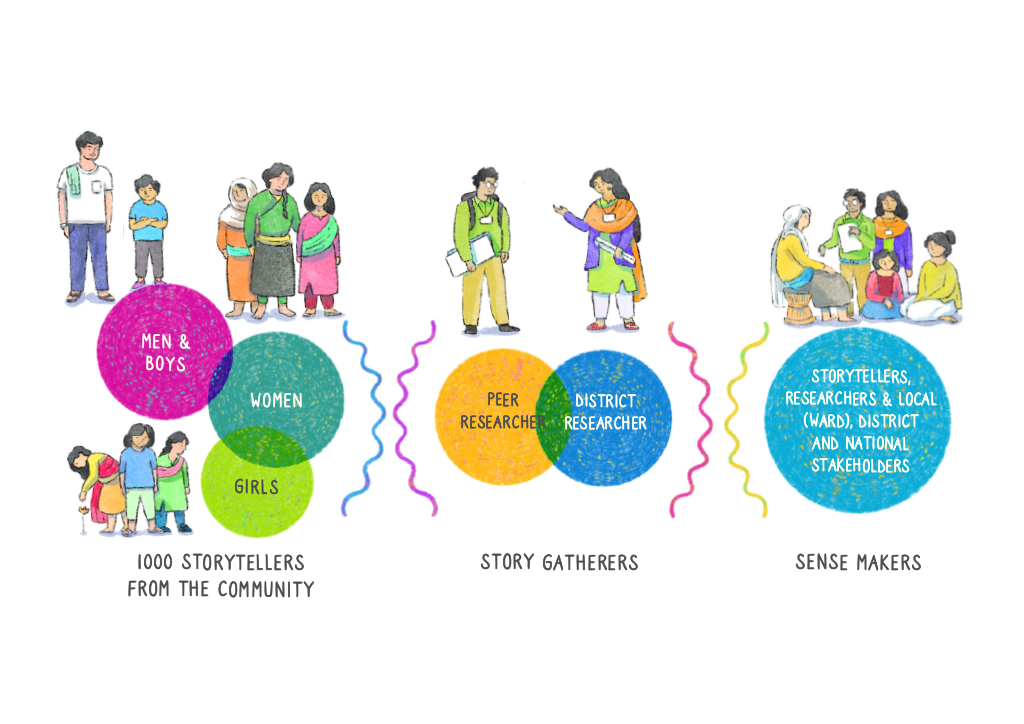
The storytelling and story-writing method used in this research is guided by narrative therapy principles that centre people as meaning makers and experts of their own lives.

Whose voice counts?
Curious to know more about how we combined old traditions with new tools?
To read more about the research process and the journey of the researchers and the story tellers, click the button below!
Hear the researchers
Watch the stories of Kali BK, Jayanti Sewa, Ritu Kadar, Sakuntal Chaudhary and Sarita Sob, the peer-researchers, to learn about how storytelling changed their perspectives and how their experiences can inform other research on social norms.
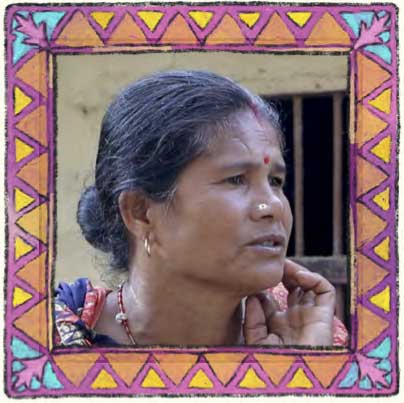
Listen to Kali BK’s story
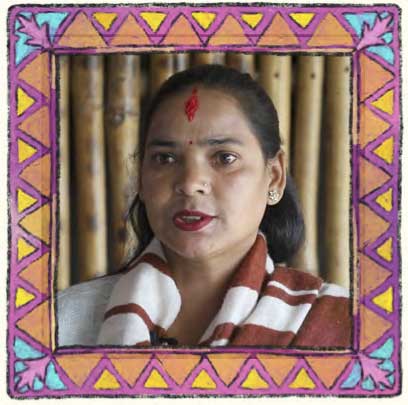
Listen to Jayanti Sewa’s story
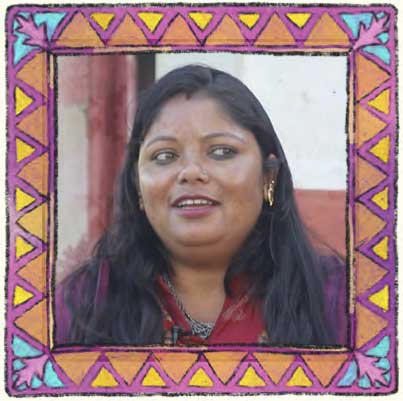
Listen to Ritu Kadar’s story
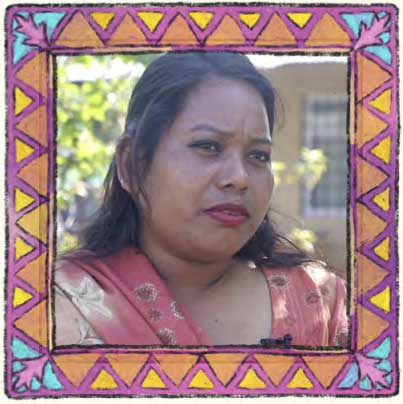
Listen to Sakuntal Chaudhary‘s story
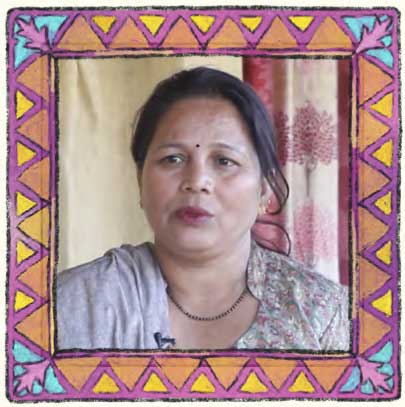
Listen to Sarita Sob’s story
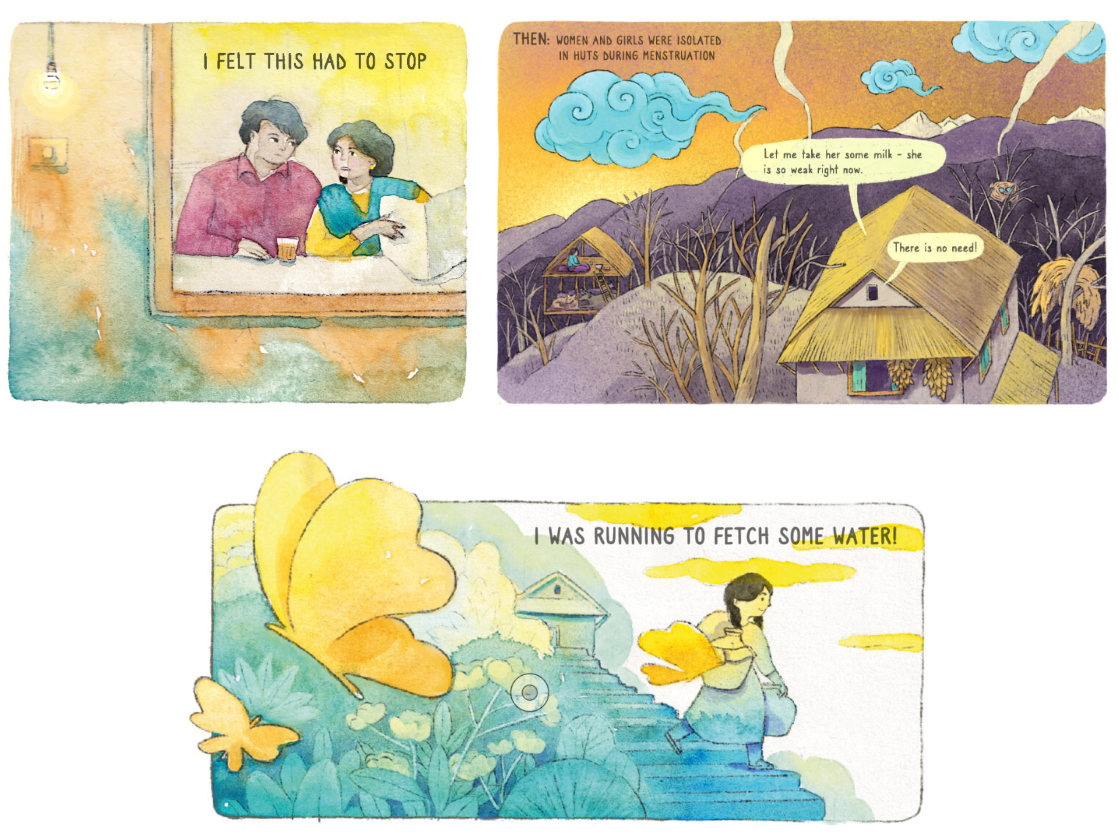
Read the comics
Want to read the stories that the women and girls shared? Click on the images below to explore the worlds of the storytellers.
The comics, illustrated by Ubahang Nembang, combine a traditional Nepali art style with digital tools. As with the research, story-telling forms an integral part of Ubahang’s (the artist) illustration journey as well.
Baseline Report
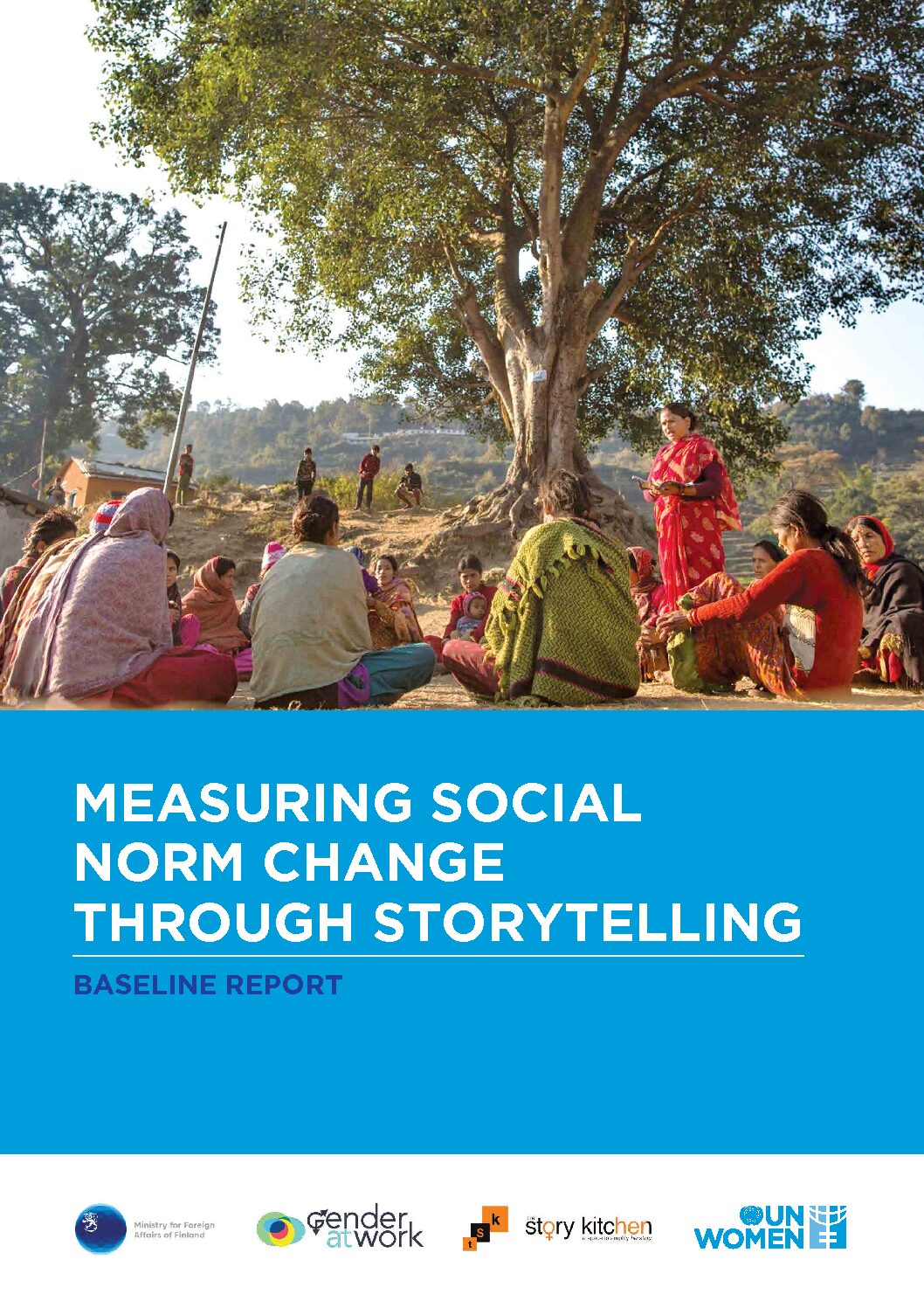
To continue engaging with our research, the story-tellers and the social norms they are contributing to, read our full report, "Measuring Social Norm Change Through Storytelling"
Gender at Work is partnering with The Story Kitchen (TSK) to undertake this research as part of Hamro Sahakarya (Our Collective Action), an initiative by UN Women Nepal funded by the Government of Finland.